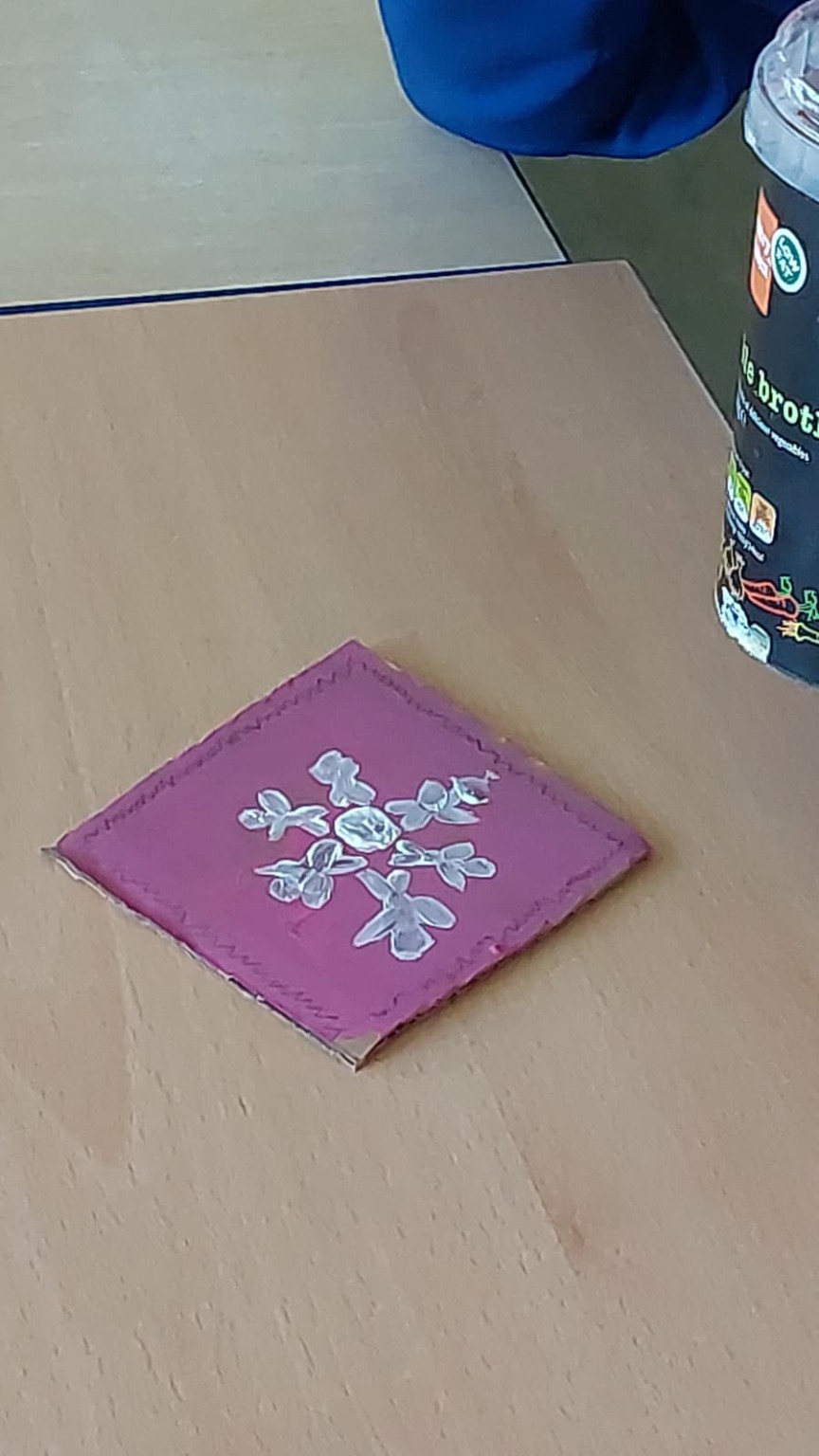
As part of Radha Sutra: Stories Across Borders, FolkDeep recently completed a meaningful Warli art storytelling workshop with students at Hazelwood Integrated College in Belfast. The session offered young participants an opportunity to engage with a traditional Indian art form through both storytelling and painting, creating a space where culture could be explored in a thoughtful, creative, and participatory way.
Warli art, which originates from the Warli tribal communities of Maharashtra, India, is known for its simple yet powerful visual language. Using geometric forms such as circles, triangles, and lines, Warli paintings often depict scenes of daily life, community celebrations, farming, rituals, and relationships with nature. Though visually minimal, the art form carries deep cultural meaning and reflects an understanding of life rooted in community, rhythm, and coexistence.
Introducing Warli art to students in Belfast was not only about sharing a traditional artistic style; it was also about opening up a conversation about cultural memory, identity, and the many ways stories can be passed on. Through Radha Sutra: Stories Across Borders, FolkDeep aims to create these kinds of learning spaces—ones where art is not treated as distant or decorative, but as a living practice that invites reflection, curiosity, and exchange.
The workshop brought together storytelling and hands-on making, allowing students to experience Warli art in a way that felt accessible and engaging. It was wonderful to see how naturally the children connected with the process. As they painted, they were not simply copying shapes or patterns; they were encountering a new cultural language and responding to it with openness and imagination.
One of the most meaningful outcomes of the session was the way students described the experience. Many reflected that the activity felt therapeutic and calming. This is a powerful reminder of what traditional arts can offer within educational settings—not only cultural learning, but also moments of quiet focus, emotional grounding, and creative reflection. In a fast-paced environment, such workshops create opportunities for students to slow down and connect with both themselves and others through art.
The reflections from the workshop also pointed toward an exciting possibility for the future. Some students showed an interest in going deeper into the intricate details and meanings of Warli art, especially through learning directly from artists themselves. This future-facing possibility lies at the heart of the Radha Sutra project: to create not just one-off workshops, but ongoing cultural exchange through storytelling, traditional knowledge, and artist-led learning.
A heartfelt thank you goes to Mr. Bury and Mrs. Abid for facilitating and supporting the session at Hazelwood Integrated College. Their involvement helped bring this cross-cultural workshop to life and made it possible for students to experience Warli art in a welcoming and meaningful setting.
This workshop marks one more step in FolkDeep’s wider journey of connecting communities across borders through living traditions. With the next Gond Art painting workshop planned for April, the journey continues—with more stories, more art, and more cultural connections ahead.