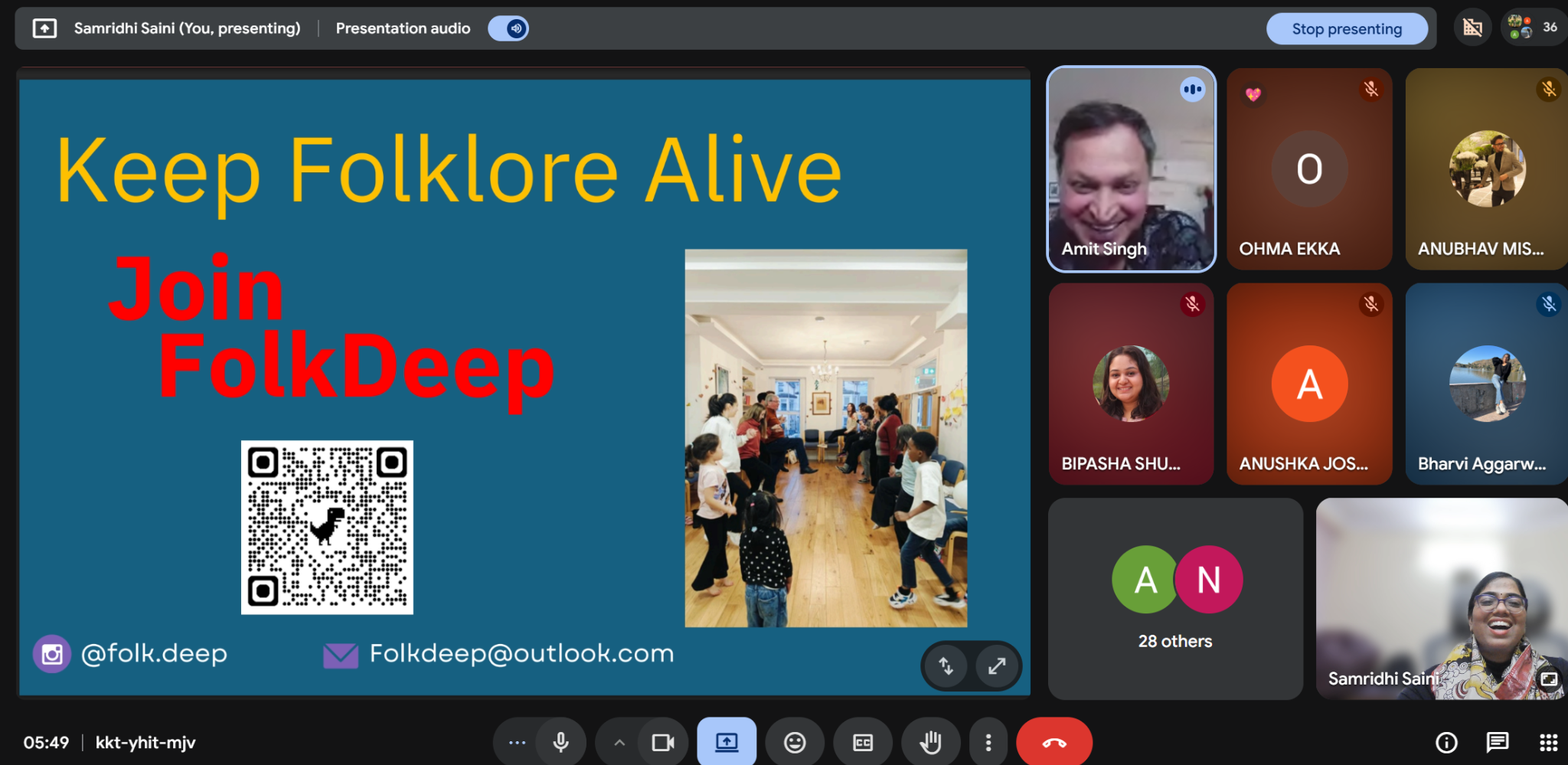
In February, FolkDeep had a deeply meaningful full-circle moment when I was invited by Dr. Amit Singh sir to speak to students of his Folklore Literature course at Ambedkar University Delhi. The session was an opportunity to share my journey as the founder of FolkDeep, but emotionally, it was much more than that. In many ways, the seed of this journey was first planted in that very academic space.
FolkDeep comes from a deeply personal place. It carries memory, grief, love, cultural curiosity, and a long-standing desire to preserve and share folk traditions in ways that feel alive and accessible. However, my time studying Folklore Literature at Ambedkar University added an important intellectual and reflective layer to this work. It helped me think more deeply about storytelling, oral traditions, cultural identity, performance, ritual, memory, and the fragile ways in which living traditions survive across generations.
Returning to the same classroom space as a guest speaker felt both emotional and grounding. I was no longer only a student trying to understand folklore through texts, fieldwork, and discussion. I was now returning as someone trying to build a cultural initiative rooted in those very questions: How do we preserve stories? Who gets remembered? What happens when traditions are not documented? How do folk practices travel across communities, cities, and borders? How can young people engage with culture in ways that are thoughtful, creative, and meaningful?
During the session, I shared the journey of FolkDeep, from its personal beginnings to its current work across folklore, storytelling, folk art, dance, oral histories, community engagement, and digital cultural archiving. I also spoke about Radha Sutra: Stories Across Borders, FolkDeep’s Belfast–Delhi cultural exchange project, which explores how communities can connect through living traditions, women’s memories, folk practices, visual art, storytelling, and creative reflection.
What made the experience especially powerful was knowing that the students were engaging with ideas that once shaped me too. Our own batch had a very mixed university experience, partly online and partly offline, so returning to that academic environment brought back many memories. It reminded me how certain spaces stay with us long after we leave them. Some classrooms do not simply teach us a subject; they change the way we see the world.
I am especially grateful to Dr. Amit Singh, sir, for the invitation, and for the knowledge, care, and thoughtfulness he brings into the classroom. His teaching and the Folklore Literature course played an important role in shaping the way I understand cultural work today.
This moment reminded me that FolkDeep is not only a project moving forward; it is also connected to the places, people, and learning spaces that helped shape its roots. Returning to Ambedkar University as a guest speaker was not just a professional milestone. It was a reminder of where the journey began, and why the work continues to matter.
Very grateful for this experience.