Phase Two of Radha Sutra: Stories Across Borders came to a meaningful completion through a series of workshops with homemakers in Delhi, as part of our digital cultural exchange project between Belfast and Delhi.
This phase focused on women whose knowledge is often held quietly within homes, families and everyday life. Homemakers carry deep cultural memory. They remember rituals, songs, food practices, seasonal traditions, family stories, childhood beliefs and local ways of understanding the world. Yet they are often left out of creative, educational and cultural opportunities. Radha Sutra created a space where this knowledge could be recognised, shared and valued.
The phase began with an Irish fairy folklore workshop, where participants were introduced to stories of fairies, sacred trees, mythical beings and supernatural traditions from Ireland. What began as an introduction to another culture quickly became a rich conversation between Irish and Indian memories. Participants connected fairy trees with Tulsi and Neem, Irish supernatural beings with figures from Indian folklore, and stories of the unseen with their own family traditions, religious beliefs and childhood experiences.
The discussion showed that folklore is not only about the past. It continues to shape how people understand nature, protection, fear, faith, memory and belonging. For many participants, Irish folklore opened a doorway into their own remembered worlds. They did not simply listen to a story from somewhere else; they responded with their own cultural knowledge.
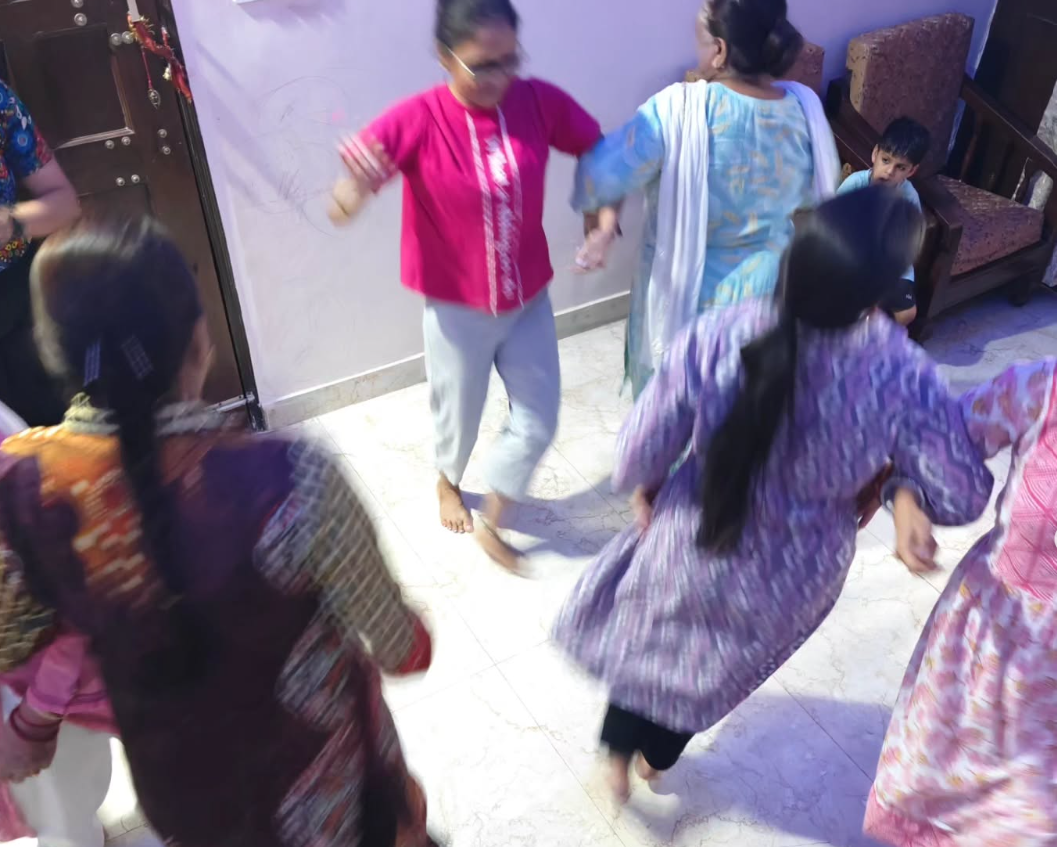
The second workshop introduced the group to Céilí dance, offering another joyful side of Irish culture. As the women learned the steps, moved together and laughed, the room became full of energy and warmth. It felt as though their childhood selves had returned. The workshop was not simply about learning a new dance form. It became a moment of freedom, play and shared happiness.
For women who are often surrounded by daily responsibilities, the act of dancing together became deeply powerful. They stepped into a space where they could learn, enjoy, make mistakes, laugh and connect. Through movement, the workshop created a form of intercultural dialogue that did not need academic language. The body, rhythm and joy became the bridge.
This phase reminded us that cultural exchange is most powerful when it is rooted in dignity and listening. The women were not passive participants. They were knowledge holders, storytellers and cultural thinkers. Their reflections brought depth, emotion and meaning to the exchange.
As Radha Sutra continues to grow, this Delhi phase will remain one of its most important foundations: a reminder that folklore lives in everyday people, and that women’s memories are essential to building meaningful cultural bridges across borders.